
Most small businesses don’t fail because they lack good tools. They fail because their tools don’t talk to each other.
Data lives in one place. Actions happen in another. Decisions require jumping between apps, tabs, and dashboards. Over time, this creates friction that slows everything down, even when each individual tool is doing its job well.
Relay.app exists to reduce that friction.
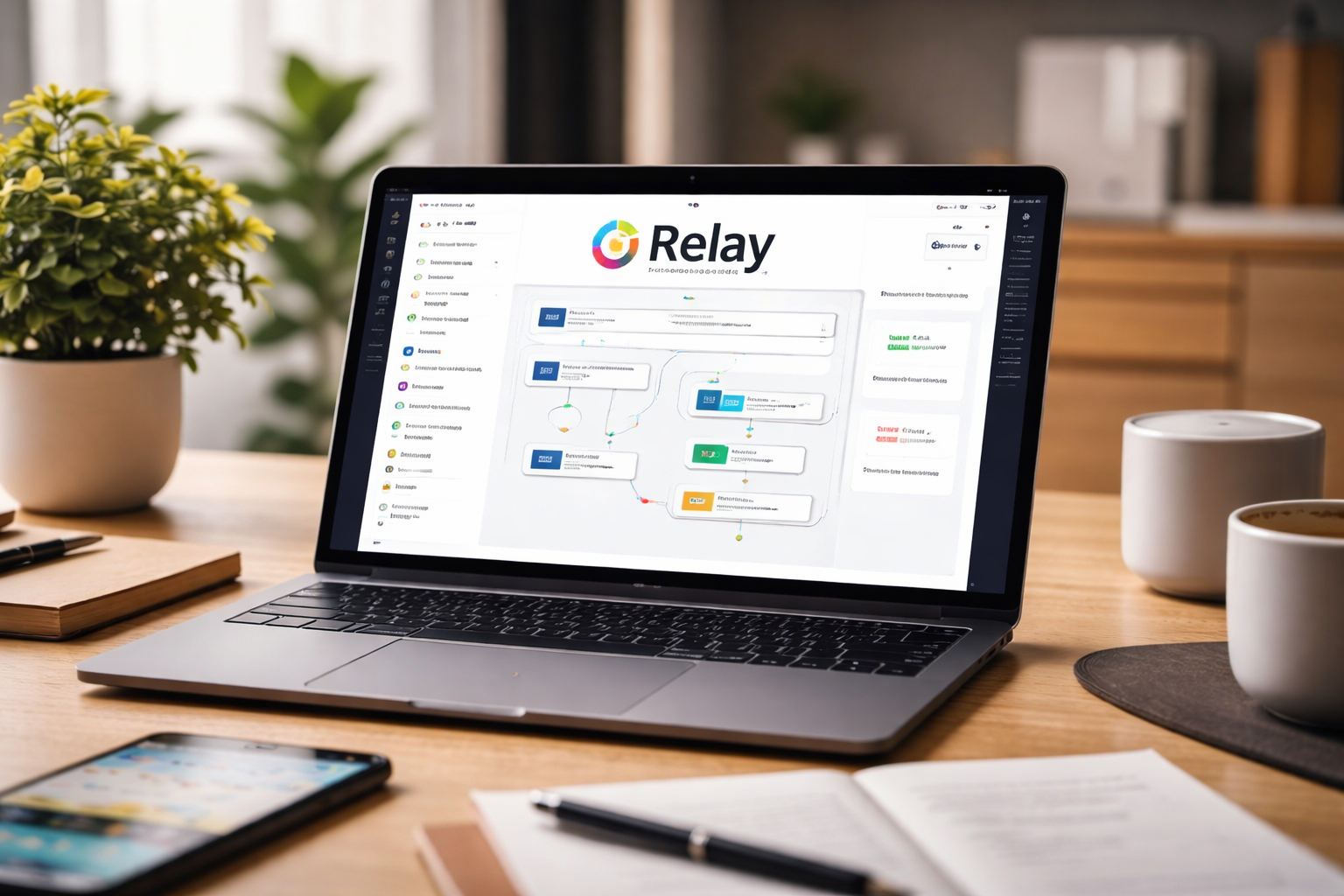
Instead of focusing on single-task automations, Relay looks at how work actually moves across tools and turns those steps into AI-powered workflows that run quietly in the background.
Where Automation Usually Breaks Down
Many small businesses start automating by fixing isolated problems. A form submits data to a spreadsheet. An email gets sent after a purchase. A task is created when something changes.
These automations help, but they don’t solve the bigger issue: work rarely happens in one step.
Real workflows involve decisions, context, and follow-ups across multiple tools. When automation stops too early, people still have to step in, reconnect the dots, and push things forward manually.
This is where Relay.app takes a different approach.
What Relay.app Does Differently
Relay.app is built around AI agents that handle entire workflows, not just individual triggers.
Instead of telling an app to perform one action, you describe the outcome you want. Relay then figures out the steps required to get there, using the tools you already work with.
For example, instead of manually checking new leads, assigning them, and sending follow-ups, Relay can handle that process end-to-end. It pulls the data, applies logic, and keeps things moving without constant supervision.
The result is automation that feels less mechanical and more adaptive.
Why This Matters for Small Businesses
Small businesses don’t have the luxury of dedicated operations teams. Processes are often owned by individuals, not systems. When someone is busy or unavailable, work slows down.
Relay.app helps reduce this dependency by turning repeatable decision paths into workflows that don’t rely on constant human input.
This doesn’t replace people. It removes unnecessary handoffs and manual coordination so teams can focus on work that actually requires judgment.
For founders and small teams, this often means fewer interruptions, fewer missed steps, and more predictable execution.
Relay.app vs Traditional Automation Tools
Traditional automation tools are excellent at connecting apps. Relay builds on that foundation by adding reasoning on top.
Where basic automation follows rigid rules, Relay introduces flexibility. It can evaluate conditions, adjust flows, and handle variations without needing a separate automation for every scenario.
This makes Relay especially useful when workflows are too complex for simple triggers, but not complex enough to justify custom development.
A More Natural Way to Automate Work
One of Relay’s strengths is how it fits into existing workflows. You don’t need to redesign how your business operates to use it.
You start with the process you already have. Then you gradually hand over the repetitive parts to AI agents. Over time, the system becomes more reliable, and manual intervention becomes the exception rather than the rule.
For small businesses, this incremental approach makes automation feel approachable instead of overwhelming.
Who Relay.app Is Best For
Relay.app is a strong fit for small businesses that:
- use multiple SaaS tools daily
- rely on repeatable internal workflows
- want automation beyond simple triggers
- don’t want to maintain complex automation logic
If your team spends time coordinating work rather than doing it, Relay is worth a closer look.
Final Thoughts
Relay.app isn’t about automating everything. It’s about automating the parts of work that shouldn’t require constant attention.
By introducing AI agents that can move work across tools intelligently, Relay helps small businesses turn scattered systems into cohesive workflows. The result is less friction, fewer dropped balls, and more time spent on work that actually moves the business forward.
Affiliate disclosure: Some links on this page may be affiliate links, meaning we may earn a commission at no extra cost to you.